

PTO Cover Set, Billet Aluminum C3 Clutch Cooling
Allison 1000 5SPD - 6SPD (2001 - 2016)
Description
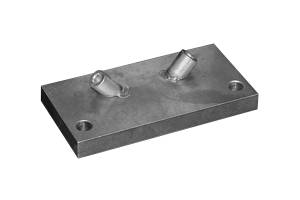
The Goerend PTO cover features an internal wing that funnels oil to a hole in the transmission case, supplying lube oil directly to the C3 clutches. This oil would otherwise return to the transmission pan unused. This patented design is designed to lubricate and cool the hardworking C3 clutches by redirecting oil already inside the transmission, without an external supply hose or a connection to a line-pressure or cooler-return port.
The cover and case passage work together. A correctly located hole must be drilled in the transmission case for the oil-directing feature to function as intended; replacing the covers alone does not complete the system. Use the Goerend jig tool to ensure proper hole location when installing Goerend PTO covers.
For customers already purchasing billet PTO covers and adding the C3 oil passage, Goerend’s design includes a purposeful oil-directing feature at a price comparable to plain billet covers.
These covers are intended to support C3 lubrication and cooling. They do not replace proper clutch clearances, assembly procedures, or transmission setup, and they are not a cure for C3 clutch failures.
Our design serves a straightforward purpose: collecting available oil and directing it to the C3 clutch pack.
What's in the box?
- (1) passenger-side billet aluminum PTO cover
- (1) driver-side billet aluminum PTO cover
- (2) PTO cover gaskets
Articles
Videos
FAQ
Heat is one of the biggest challenges in maintaining clutch durability in an Allison transmission. While clutch material, hydraulic pressure, and clutch clearances all play important roles, the amount of oil available during clutch engagement is another critical factor. Understanding how oil interacts with the friction material helps explain why the C3 clutch is particularly susceptible to overheating and how Goerend's patented PTO cover oiling system is designed to help.
Automatic transmission clutch linings are made from porous friction materials that absorb and retain transmission fluid. When a clutch applies, the friction material is compressed against the steel plates, squeezing oil out of the lining. This oil helps cool the friction surfaces and dissipate heat generated during engagement.
The thickness and porosity of the friction material determine how much oil it can retain. A thicker, more porous lining generally holds more fluid than a thinner, less porous lining, which can make a significant difference during clutch application.
For example, consider a clutch lining that retains enough oil to release fluid throughout a 0.6-second application. If that lining is replaced with a thinner material that releases most of its oil within 0.3 seconds, but the clutch takes 0.5 seconds to fully apply, the friction surfaces may have significantly less oil available during the final 0.2 seconds of engagement. Without adequate oil to help manage the heat being generated, the steel plates become more susceptible to overheating. Although these times are illustrative, they demonstrate why oil retention and replenishment are important to clutch durability.
This becomes particularly relevant when examining how the C3 clutch operates in an Allison transmission. The C3 clutch applies when the transmission shifts into third gear. During this initial engagement, the friction linings have generally had an opportunity to absorb transmission fluid, providing oil that can be squeezed out to help cool the steel plates.
When the transmission shifts into fourth gear, the C3 clutch releases, having already expelled some of the oil retained within its friction material. Depending on driving conditions, the transmission may remain in fourth gear for only 10 to 15 seconds before shifting into fifth. When that shift occurs, the C3 clutch must apply again, potentially before its friction linings have had sufficient time to fully replenish their oil.
As a result, the C3 clutch may enter the fourth-to-fifth shift with less oil available to control heat during engagement. This helps explain why overheating can become a concern during the fourth-to-fifth shift, even when the initial application into third gear causes no apparent problems.
Allison incorporates another design feature to help manage the effects of this heat: slotted C3 and C4 steel plates. When the outer diameter of a steel plate becomes significantly hotter than the inner diameter, the difference in thermal expansion can cause the plate to distort or warp. The slots help accommodate this uneven expansion and reduce the likelihood of distortion.
A similar principle can be seen in circular saw blades, which commonly feature expansion slots extending inward from the outer diameter. As the outside edge becomes hotter than the center, these slots help prevent the blade from warping. The slots in Allison's clutch steels serve a similar purpose.
While these features help manage the effects of heat, improving oil availability around the clutch provides another opportunity to protect the friction surfaces. This is the principle behind Goerend's patented PTO cover oiling system.
Rather than introducing oil through external hydraulic hoses, Goerend's design takes advantage of fluid already moving inside the transmission. As the C2 drum rotates, it throws oil into the surrounding area. Goerend's specially designed PTO cover incorporates a wing that captures this oil and allows it to accumulate near a passage drilled into the transmission case.
The collected oil then flows through this passage into the lower portion of the C3 clutch area, creating a localized pool of oil that the rotating clutch components continually pass through.
Think of it as the clutch running through a shallow bathtub of transmission fluid. Instead of relying solely on oil sprayed toward the rotating components, the clutch repeatedly passes through the accumulated oil as it turns. This provides an additional opportunity for fluid to contact the clutch components and replenish oil around the friction surfaces.
This approach differs from aftermarket oiling systems that introduce fluid near the top of the PTO cover. When oil is sprayed onto rotating clutch components from above, centrifugal force can quickly throw the fluid outward. Goerend's system instead collects oil at the bottom of the clutch area, where the rotating components can repeatedly pass through it.
The wing incorporated into the PTO cover is essential to this process. Without it, oil thrown from the rotating drum can accumulate elsewhere in the housing rather than near the oiling passage. By capturing the oil in the intended location, the wing helps maintain a supply of fluid that can be directed toward the C3 clutch.
Another advantage of this design is its simplicity. Some aftermarket oiling systems require external hoses and fittings to draw fluid from existing hydraulic circuits, such as line pressure or cooler pressure. Depending on the configuration, diverting oil from these circuits can affect the pressure or flow available elsewhere in the transmission, particularly at lower engine speeds when cooler pressure may already be relatively low. External plumbing also introduces additional connections that can potentially leak.
Goerend's system avoids these concerns by collecting and redirecting oil already present inside the transmission, without requiring an external pressurized oil supply or additional hydraulic hoses.
Installation is straightforward when the transmission is already disassembled. The process involves drilling the appropriate passage into the case, thoroughly removing any drilling debris, and installing the specially designed PTO covers. For an experienced builder, the drilling and preparation process can take approximately ten minutes. The oiling PTO covers are also priced comparably to standard PTO covers, making the modification an economical addition during a transmission build.
Of course, additional oiling is not a cure for every clutch-related problem. Improper clutch clearances, inadequate apply pressure, excessive clutch slip, and other transmission issues can still generate enough heat to damage the clutch pack. Proper transmission assembly and operation remain essential regardless of how much additional oil is supplied.
However, improving the availability of oil around the C3 clutch is a practical way to help manage heat, especially in demanding applications where increased power and repeated clutch engagements place additional stress on the transmission.
Goerend's patented PTO cover oiling system accomplishes this with a simple approach: capturing oil already circulating within the transmission and directing it where the C3 clutch can repeatedly pass through it. With minimal installation time, no external plumbing, and little additional cost compared with standard PTO covers, the system provides supplemental oiling without adding unnecessary complexity to the transmission.
Details
- A-GT-PTO-L
- A-GT-PTO-L
- Goerend
- New
Categories
Shipping Information
- Item Requires Shipping
- 5.0 lbs.
- W5.0000” x H4.0000” x L10.0000”