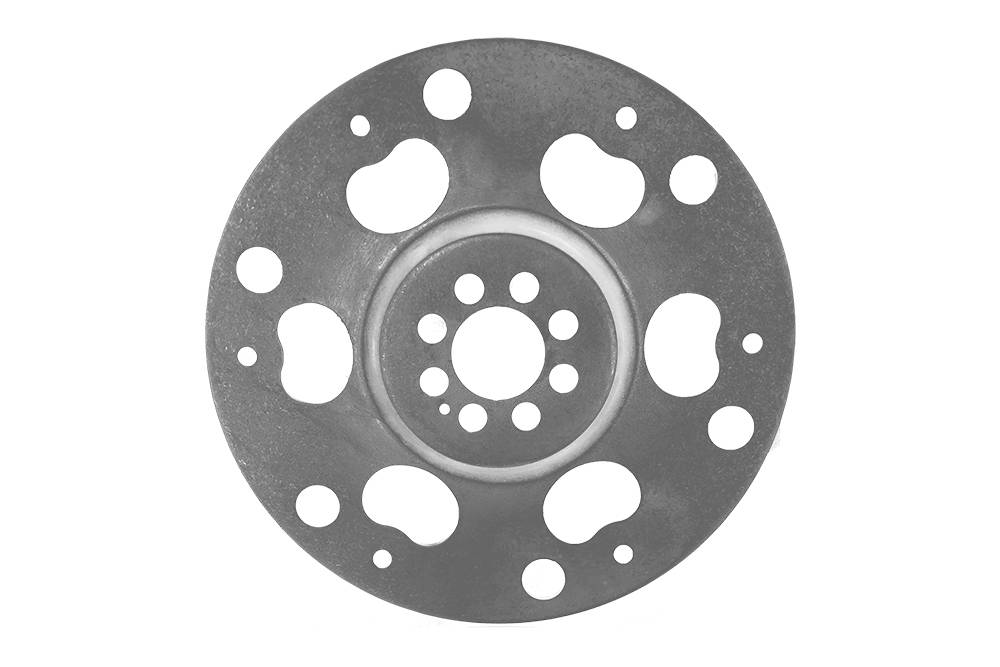
Flexplate, High-Strength Steel
Allison 1000 5SPD - 6SPD
GFP-ALLISON
Pricing:
$349.00
Description
Goerend Difference:
- Reliably handle up to 1,500 lb•ft of torque
- Twice the material of the stock flex plate
- Precision-balanced
- Allows axial thrust unlike solid flywheel conversions
- Direct, bolt-in replacement for the stock unit
- Stronger & more economical replacement for OEM
FAQ
Should I use the OEM shim with this flexplate?
We have seen two different sizes of the OEM flexplate shim (12638261). The outside diameter may either measure 5.3" or 5.5". The OEM flexplate shim diameter may need to be ground to 5.3" in order to fit into the pocket of the flexplate. Our plate has been used successfully with no shim.
How should I install the torque converter bolts?
Allison 1000 flexplates feature one oblong torque converter bolt hole which helps align the bolt holes center with the torque converter bolts. When installing the flexplate, you must start with hand tightening the oblong bolt hole fist to avoid the potential of cross threading. When all bolts are started by hand you may finish tightening all bolts.
Flex Plate Engineering: Balancing Strength & Flexibility
The flexplate is a critical but often misunderstood component in the drivetrain, acting as the mechanical link between the engine’s crankshaft and the torque converter. While it may appear to be a plate, its role involves managing competing forces that make its design far more complex than it seems.
At its core, the flexplate bolts directly to the rear of the crankshaft, which itself has almost no axial movement, typically only a few thousandths of an inch. In practical terms, the crankshaft can be considered fixed in the forward and backward direction. The torque converter then bolts to the flexplate, and because of its internal geometry, it constantly applies a forward thrust force toward the engine. Since the crankshaft cannot move to absorb this force, the flexplate becomes the component that must deform to accommodate it.
This creates a fundamental design challenge. The flexplate must be flexible enough to absorb thrust loads and cyclical deflection, yet strong enough to transmit rotational torque from the engine to the transmission. Every time the driver applies or releases the throttle, internal pressures within the transmission change, causing the converter to push and release against the flexplate. This results in constant flexing. Over time, this repeated motion creates fatigue, and cracks typically develop near the mounting area where movement is most restricted.
At the same time, the flexplate is subjected to significant rotational forces. As the engine spins, torque is transmitted through the plate to the converter. If the plate is too thin, it may flex easily under thrust loads but lack the structural integrity to handle torsional stress, leading to failure from rotational fatigue. On the other hand, if the plate is made thicker to improve torque capacity, it resists bending and instead concentrates stress in localized areas, again leading to cracking. This balance between flexibility and strength is the central engineering tradeoff in flexplate design.
The problem is further compounded by the fact that flexing introduces angular misalignment. When the plate deflects, the connection between the crankshaft and converter is no longer perfectly straight. This creates additional stress, as loads are now applied at an angle rather than along a direct axis. The situation is similar to lifting a weight straight up versus lifting it at an angle. Angled loading introduces significantly more strain on the system. As a result, the flexplate experiences not only axial and torsional forces, but also bending and misalignment stresses simultaneously.
Material choice plays a major role in how well a flexplate can handle these conditions. Traditional plates made from lower-strength steels may fail at relatively low stress levels, while higher-strength alloys such as 4140 steel can withstand significantly greater loads before deforming or cracking. The internal structure of the material matters as well; cast materials tend to have less uniform grain structure compared to forged or billet steel, making them more prone to failure under repeated stress cycles. For high-performance or racing applications, stronger materials are often required to meet safety standards and prevent catastrophic failure.
Another important concept is that the flexplate can act as a mechanical “fuse” in the system. In some cases, it is preferable for the flexplate to fail rather than transfer excessive force into the crankshaft and its thrust bearings. If the plate is made too rigid, it may protect itself from damage but instead cause wear or failure in more critical and expensive engine components. This highlights the importance of designing the flexplate not just for durability, but for controlled behavior within the overall system.
Design features such as holes or slots also influence how stress is distributed across the plate. Round holes tend to spread stress more evenly, reducing localized concentrations, while slots may allow for increased flexibility but can create areas where stress is focused. Engineers must carefully evaluate these features, often using simulation tools, to determine how the plate will behave under real-world conditions. Additionally, processes like shot peening can be used to introduce compressive stress into the surface of the material, improving fatigue resistance and helping prevent crack initiation.
Ultimately, the flexplate exists in a constant state of compromise. It must flex, but not too much. It must be strong, but not so rigid that it transfers damage elsewhere. It must handle both rotational torque and axial thrust while enduring continuous cycling over the life of the vehicle. Understanding these competing demands is key to designing a flexplate that performs reliably under both everyday driving and high-performance conditions.
We have seen two different sizes of the OEM flexplate shim (12638261). The outside diameter may either measure 5.3" or 5.5". The OEM flexplate shim diameter may need to be ground to 5.3" in order to fit into the pocket of the flexplate. Our plate has been used successfully with no shim.
How should I install the torque converter bolts?
Allison 1000 flexplates feature one oblong torque converter bolt hole which helps align the bolt holes center with the torque converter bolts. When installing the flexplate, you must start with hand tightening the oblong bolt hole fist to avoid the potential of cross threading. When all bolts are started by hand you may finish tightening all bolts.
Flex Plate Engineering: Balancing Strength & Flexibility
The flexplate is a critical but often misunderstood component in the drivetrain, acting as the mechanical link between the engine’s crankshaft and the torque converter. While it may appear to be a plate, its role involves managing competing forces that make its design far more complex than it seems.
At its core, the flexplate bolts directly to the rear of the crankshaft, which itself has almost no axial movement, typically only a few thousandths of an inch. In practical terms, the crankshaft can be considered fixed in the forward and backward direction. The torque converter then bolts to the flexplate, and because of its internal geometry, it constantly applies a forward thrust force toward the engine. Since the crankshaft cannot move to absorb this force, the flexplate becomes the component that must deform to accommodate it.
This creates a fundamental design challenge. The flexplate must be flexible enough to absorb thrust loads and cyclical deflection, yet strong enough to transmit rotational torque from the engine to the transmission. Every time the driver applies or releases the throttle, internal pressures within the transmission change, causing the converter to push and release against the flexplate. This results in constant flexing. Over time, this repeated motion creates fatigue, and cracks typically develop near the mounting area where movement is most restricted.
At the same time, the flexplate is subjected to significant rotational forces. As the engine spins, torque is transmitted through the plate to the converter. If the plate is too thin, it may flex easily under thrust loads but lack the structural integrity to handle torsional stress, leading to failure from rotational fatigue. On the other hand, if the plate is made thicker to improve torque capacity, it resists bending and instead concentrates stress in localized areas, again leading to cracking. This balance between flexibility and strength is the central engineering tradeoff in flexplate design.
The problem is further compounded by the fact that flexing introduces angular misalignment. When the plate deflects, the connection between the crankshaft and converter is no longer perfectly straight. This creates additional stress, as loads are now applied at an angle rather than along a direct axis. The situation is similar to lifting a weight straight up versus lifting it at an angle. Angled loading introduces significantly more strain on the system. As a result, the flexplate experiences not only axial and torsional forces, but also bending and misalignment stresses simultaneously.
Material choice plays a major role in how well a flexplate can handle these conditions. Traditional plates made from lower-strength steels may fail at relatively low stress levels, while higher-strength alloys such as 4140 steel can withstand significantly greater loads before deforming or cracking. The internal structure of the material matters as well; cast materials tend to have less uniform grain structure compared to forged or billet steel, making them more prone to failure under repeated stress cycles. For high-performance or racing applications, stronger materials are often required to meet safety standards and prevent catastrophic failure.
Another important concept is that the flexplate can act as a mechanical “fuse” in the system. In some cases, it is preferable for the flexplate to fail rather than transfer excessive force into the crankshaft and its thrust bearings. If the plate is made too rigid, it may protect itself from damage but instead cause wear or failure in more critical and expensive engine components. This highlights the importance of designing the flexplate not just for durability, but for controlled behavior within the overall system.
Design features such as holes or slots also influence how stress is distributed across the plate. Round holes tend to spread stress more evenly, reducing localized concentrations, while slots may allow for increased flexibility but can create areas where stress is focused. Engineers must carefully evaluate these features, often using simulation tools, to determine how the plate will behave under real-world conditions. Additionally, processes like shot peening can be used to introduce compressive stress into the surface of the material, improving fatigue resistance and helping prevent crack initiation.
Ultimately, the flexplate exists in a constant state of compromise. It must flex, but not too much. It must be strong, but not so rigid that it transfers damage elsewhere. It must handle both rotational torque and axial thrust while enduring continuous cycling over the life of the vehicle. Understanding these competing demands is key to designing a flexplate that performs reliably under both everyday driving and high-performance conditions.
Details
- GFP-ALLISON
- GFP-ALLISON
- Goerend
- New
Categories
Shipping Information
- Item Requires Shipping
- 9.0 lbs.
- W15.0000” x H5.0000” x L15.0000”